|
 |
|||||
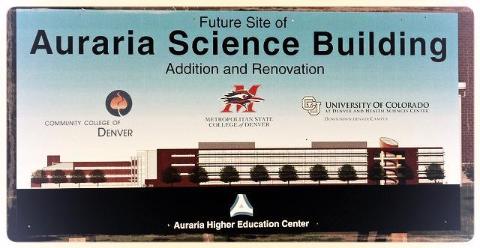
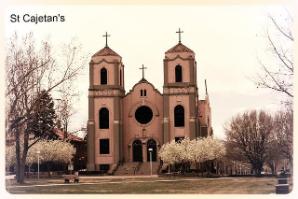
Urban Redevelopment: Auraria CampusBy: George L. Humphries II GEOG 4335 University of Colorado Denver, 2012 The founding and development of Auraria Campus holds a rich 150-year history. This history parallels that of Denver’s growth and design and was unavoidably influenced by its governing agents. Auraria’s birth is marked by the arrival of the Russell brothers, who founded the original town of Auraria on November 1st, 1858 on the west bank of Cherry Creek. The Russell party was composed of numerous prospectors from Georgia anxious to capitalized on the riches offered by gold within the region. The name Auraria was chosen because of its duel connotation; first it was the town that the Russell’s had came from, and second it’s derived from the Latin word for gold. In 1860 Auraria merged with Denver, another mining camp situated on the east bank of Cherry Creek. In time, as the burgeoning city continued to engulf its hinterland, this area become known as West Denver. By the turn of the 20th century this area functioned as a thriving, culturally rich Latino community but began to change with the economic boom of the mid-20th century. This ‘golden age’ of economic growth accelerated production and manufacturing endeavors that had a profound impact on the composition of the area. In turn this transformed Auraria into a distinct commercial and industrial district. As a result of this alteration in the town dynamic, by 1970 fewer than a thousand residents still called this area home. By 1970, the Denver Urban Renewal Authority (DURA) had set its gaze on the blighted area and began to visualize its future. DURA’s focus to redevelop this area manifested itself by the assembly and formation of the Auraria Higher Education Center (AHEC). AHEC began its development strategy with the consolidation of three separate universities within the Denver metropolitan area, the Community College of Denver, Metro State, and the University of Colorado Denver. Interestingly the initial vision of AHEC was to create a non-traditional but highly inclusive university. The theoretical idea was that students without a high school diploma could start at CCD, then move to Metro for a four-year degree, and ultimately finish with a masters or a doctorate at UCD. However, this idea was quickly abandoned due to the massive growth of the student populace within the first year. In 1977 the campus opened for all three schools and drastically exceeded the anticipated enrolment. Initial expectations were for 13,000 to 15,000 students, but by 1980 the enrolment rate exceeded 25,000. Due to the schools popularity AHEC created a development strategy and vision for the future development of the campus. The 1970’s and 80’s were marked by the park-like pavilion development vision and very distinct architectural designs. The first generation of buildings were constructed on the east side of the campus and distinguished architecturally by the three-story red brick construction. Through the 1980’s this development vision and approach persisted but began to usher a concern for historical preservation. During the 1990’s the growing trend of honoring and preserving the historical roots and architecture styles that distinguished places had a big influence on Auraria campus. During the design and planning period, two key elements were chosen as important and essential to the future identity of the campus. First was the historic street grid of the original town, and second were the culturally and architecturally significant buildings. What emerged as a result of this was a distinct campus identity distinguished by historical building like the Tivoli Brewer, St. Elizabeth’s Church, Cajetan’s Church, the Emanuel Gallery, and the 9th Street historic homes. The other external trend that helped influence AHEC’s design trajectory was municipal goals like the Denver Park and Recreation Plan. This particular plan focused on the expansion and extension of green spaces within the urban city and focused particularly on pedestrian connections. In turn what this produced was the direct engagement of AHEC and city planners in design approaches while simultaneously highlighting the duel influence that the city and the campus dynamic created. With this came the unification of public and private development interests within the Auraria campus area, and the transition of a new future development visions. By 2007 a new master plan was constructed that paved the way for the next 20 years of growth. This new plan abandons the initial park-like pavilion design approach due to the changing nature of the urban core. In its place an urban campus model, utilizing new architectural materials and styles with an increased focus on campus density, will mark the future development of Auraria campus. |
||||||