Energy: Cherokee Station & Zuni Generation Station
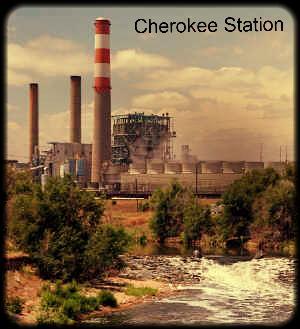
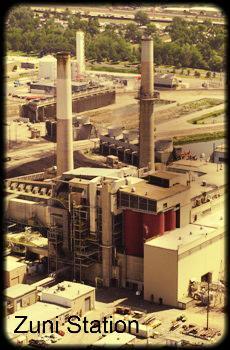
By: Claire Townsend GEOG 4335 University of Colorado Denver, 2012 The Zuni and Cherokee Generation Stations are extremely significant in terms of Denver’s power supply and their location along the Platte River. Zuni Station is located on the eastern bank of the South Platte and was originally established in 1900 as one of Colorado’s oldest energy plants; it has historically been a coal-fired plant. Today, it provides natural gas and steam energy to essentially all of downtown Denver. Cherokee Station has been in operation since 1957, and is currently a coal-fired, steam-electric generator with multiple operating units, as well as natural gas capabilities. Cherokee imports its coal from several mines in western Colorado, and is also one of Xcel’s largest power plants in Colorado in regard to power production capability. Cherokee plant mitigates its air pollution by using “baghouses” that act as massive vacuums, removing 99 percent of fine particulates emitted. The three units also have low nitrogen-oxide burners that also reduce emissions by approximately 40 percent. Unit 1 and Unit 3 at Cherokee also have dry sorbent injection systems and lime spray dryers that are contributing to a 70 percent reduction in the plants SO2 emissions. The future of Cherokee energy will involve the transition of Units 1-3, as well as a fourth unit, from coal to natural gas by 2017. This will greatly reduce the plant’s CO2 emissions. To increase its natural gas supply, Xcel is planning to construct a 34 mile steel gas transmission pipeline from Ft. Lupton, and the project is set to begin in 2013. |
Power ProductionCherokee: 611 megawatts (3 Units) Annual Water Usage: 2.4 billion gallons (South Platte and Clear Creek) Zuni: 109 megawatts (1 Unit), 300,000 lbs of steam/hour Annual Water Usage: 98 million gallons (South Platte)
Although
Xcel has made considerable efforts to reduce emissions from the plants, there
have been environmental issues associated with them. In 2007, oil seeped
from the Zuni Station into the Platte River, catalyzed by a “malfunction caused
by transfer of oil”. The seepage was not found to cause any
extensive environmental damage, but it nevertheless altered the Platte
River. Historically, there have also been environmental justice issues
associated with both plants. Of over 400 coal plants in the U.S. Cherokee
was rated the tenth worst in terms of an environmental justice assessment
conducted by the EPA; this was based on the demographics of surrounding
neighborhoods, including race and income, as well as health and environmental
impacts. The two plants also take an extremely large amount of water from
the South Platte, totaling approximately 2.5 billion gallons per year. In a dry
climate such as that of Colorado, particularly with combined issues of drought
and water limitations, this could prove to be problematic in the future.
Although, Xcel Energy has also taken the initiative to utilize Denver Water’s
re-use plant and runs more than 1.7 billion gallons of recycled water
annually. |