Urban Redevelopment: REI & Confluence Park

By: Tarryn Montoya

GEOG 4335

University of Colorado Denver, 2012

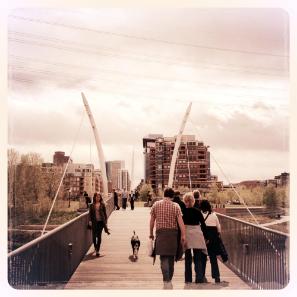
         Denver began its first settlements along the Cherry Creek and South Platte river when settlers from the east and Arapaho Indians started a trade camp in 1815. During the 1840’s many more trading posts were established in the region. Once gold was discovered in 1858 by William Green Russell in the Cherry Creek near Auraria population in the area exploded with people hoping to strike rich in both the Cherry Creek/South Platte area and the Rocky Mountains. Settlers started acquiring more land from the Indians and even married some of the women. Today we can find streets with the names of settlers Indian wives like Wewata, Champa, and Wazee. Little Raven was named after an Arapaho chief who the settlers first met. Denver and Auraria both grew and were rivals until 1960 when a bridge spanning the two united them. This is the site of Confluence Park.

        The REI building started as the Denver Tramway Company built in 1901. It built the electric streetcar lines in Denver. It also housed the boilers and engines to generate electricity for the rail system. The location worked because it was by the South Platte which helped with cooling the turbines, it also had easy access to the coal from adjacent rail lines, and it was a central location to their main terminal. After the car boom, the company was closed in 1950 and bought and turned into the Forney Museum of Transformation in 1969. This housed all things transportation from trains, cars, bicycles, and motorcycles. The collection got so large they were forced to move locations. They are now located on 4303 Brighton Blvd. In 1998 REI bought the building. This was a prime location because it was close to the highway, bike paths, and downtown Denver. Renovations were done in 2000 and the building was added the National Register of Historic Places.